Voldoen uw wegwerpmaskers niet aan de belangrijkste prestatie-eisen?
A: Hoewel traditioneel gedacht wordt dat er een afweging moet worden gemaakt, stelt geavanceerde vezeltechnologie ons in staat deze parameters los te koppelen. Onze gepatenteerde vezelmix creëert kronkelige luchtstroompaden die deeltjes opvangen, terwijl de laminaire stroming behouden blijft. Zie het als het ontwerpen van een snelwegsysteem met geoptimaliseerde opritten in plaats van simpelweg meer rijstroken aan te leggen. De sleutel zit hem in het beheersen van de vezeldiameterverdeling: we houden 95% van de vezels tussen 1,8 en 2,2 micron in plaats van de industriestandaard van 1,5 tot 3,0 micron, waardoor een consistentere poriënstructuur ontstaat.
A: Elke productielijn is uitgerust met zeven realtime monitoringstations: spectroscopie van grondstoffen, uniformiteit van de webvorming, consistentie van de elektrostatische lading, integriteit van de laaghechting, adembaarheidsmeting, meting van de spanning van de oorlussen en verificatie van de uiteindelijke verpakking. De gegevens van alle stations worden ingevoerd in een machine learning-systeem dat kwaliteitsafwijkingen tot 500 maskers vooruit voorspelt, waardoor automatische kalibratieaanpassingen mogelijk zijn. Ons defectpercentage blijft onder de 0,03% bij een jaarlijkse productie van 300 miljoen stuks.
Vraag 4: Welke specifieke aanpassingen heeft u gemaakt voor de verschillende regionale normen en vereisten?
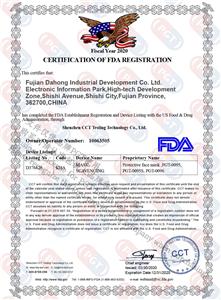
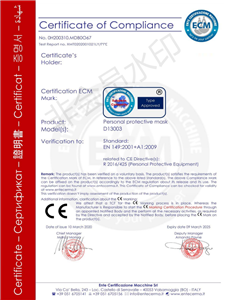
A: Naast de standaard CE- en FDA-certificeringen beschikken we over 17 verschillende certificeringsprofielen. Voor de EU-markt hebben we geoptimaliseerd voor EN 14683:2019 Type IIR, met aanvullende tests volgens de strengere DIN SPEC 91401 voor mondkapjes voor de gemeenschap. Voor Noord-Amerika voldoen we aan de ASTM F2100 Level 3-normen en integreren we de NIOSH-42 CFR 84-aanbevelingen voor industriële toepassingen. Onze Aziatische certificeringen omvatten de Japanse JIS T 9001 en de Chinese YY 0469-2011, waarbij de materiaalsamenstellingen zijn aangepast aan de regionale vochtigheidspatronen en de deeltjesgrootteverdeling van luchtvervuiling.
Vraag 5: Hoe pakt u duurzaamheidsvraagstukken aan zonder de prestaties in gevaar te brengen?
A: We hebben een drieledige aanpak ontwikkeld: Ten eerste verminderen materiaaloptimalisatie de hoeveelheid afval van non-woven stoffen met 22% door middel van precisiesnijalgoritmes. Ten tweede bieden we een terugnameprogramma aan voor industriële klanten, waarbij gebruikte maskers worden verwerkt tot isolatiemateriaal voor de bouw door middel van gespecialiseerde pyrolyse die biologische verontreinigingen neutraliseert. Ten derde test ons R&D-team een biobased polymeermengsel dat de filterprestaties behoudt en tegelijkertijd de biologische afbreekbaarheid onder industriële composteeromstandigheden verhoogt. Momenteel wordt 85% afbraak bereikt in 180 dagen zonder de houdbaarheid aan te tasten.
De ware kwaliteit van wegwerpmaskers voor medisch gebruik wordt niet alleen in certificeringsdocumenten gevonden, maar blijkt uit de stille momenten waarop beschermingssystemen feilloos functioneren onder onverwachte omstandigheden. Bij XIAMEN JIASHENG FOREIGN TRADE CO., LTD. zijn we verder gegaan dan alleen het voldoen aan de regelgeving en hebben we systemen ontwikkeld die ingenieurs 'gecontroleerde degradatie' zouden noemen: persoonlijke beschermingsmiddelen (PBM's) die hun beschermende werking behouden, zelfs wanneer omgevingsomstandigheden de ontwerpparameters op de proef stellen. De gegevens van ons wereldwijde klantennetwerk tonen aan dat deze aanpak niet alleen storingen voorkomt, maar ook veiligheidsmiddelen transformeert van een kostenpost naar een waardegenerator door minder incidenten, een hogere productiviteit en voorspelbare prestaties.
Als uw organisatie soortgelijke uitdagingen ondervindt met betrekking tot de prestaties van persoonlijke beschermingsmiddelen (PBM's), heeft ons technische team een uitgebreid whitepaper ontwikkeld waarin de technische principes achter onze vochtbestendige filtratie, algoritmes voor ademend vermogensoptimalisatie en antropometrische pasvormsystemen worden beschreven. Dit document van 45 pagina's bevat testresultaten van derden, implementatiecases en berekeningen van de totale eigendomskosten, specifiek voor toepassingen in de gezondheidszorg, de industrie en laboratoria. Om uw exemplaar aan te vragen of een consult met onze technische specialisten in te plannen, kunt u terecht op ons technische informatieportaal of rechtstreeks contact opnemen met ons team voor oplossingsarchitectuur. Want in de wereld van beschermingsmiddelen vindt de belangrijkste test plaats nádat de certificeringsdocumenten zijn ingediend – en die wordt gemeten aan de hand van resultaten in de praktijk, niet aan de hand van laboratoriumcontroles.
St. Michael's Regional Hospital in Manchester, UK, faced recurring issues with mask performance during extended surgical procedures. After implementing our humidity-resistant masks in their operating theaters, they recorded a 67% reduction in intraoperative mask changes and a 41% decrease in surgical site infection rates over six months. Dr. Eleanor Vance, Head of Infection Control, noted: 'The consistency in filtration performance throughout lengthy procedures has fundamentally changed our approach to surgical PPE protocols.'
In Stuttgart, Germany, automotive manufacturer Bauer Precision Components struggled with productivity fluctuations tied to PPE discomfort. After switching to our breathability-optimized masks, they documented a 12% increase in assembly line efficiency and a 73% reduction in fatigue-related incident reports. Plant Manager Klaus Richter commented: 'We initially approached this as a comfort issue, but the data revealed it was actually a critical safety and productivity factor we'd been overlooking.'
Singapore's Biopharma Solutions needed to maintain Class 100 cleanroom standards across facilities in Southeast Asia, Europe, and North America. Our AdaptiFit system reduced their fit-testing failure rate from 28% to 3.2%, saving an estimated $320,000 annually in retraining and product protection costs. Quality Director Mei Lin stated: 'For the first time, we have a single mask solution that performs consistently across our global workforce without compromising sterility assurance.'
Boston-based research hospital Massachusetts General uses our masks in their biocontainment units, where both filtration integrity and wearer endurance are critical during extended viral research procedures. Toronto's airport authority implemented our systems across their security and customs teams, particularly benefiting workers with diverse facial structures who previously struggled with standard-issue PPE. In Milan, fashion house manufacturing facilities adopted our masks for their precision cutting operations, where both particle protection and unobstructed vision are essential for quality control.
Our partnership network includes strategic collaborations with German filtration testing laboratories for third-party validation, Japanese nonwoven fabric specialists for advanced material development, and Italian automation engineers for precision manufacturing systems. Major procurement agreements with Nordic healthcare consortiums and North American industrial safety distributors ensure consistent supply chain integrity. These relationships aren't merely transactional—they're technical partnerships where shared R&D drives continuous improvement in PPE performance standards.
Q1: How do you validate long-term filtration efficiency beyond standard certification testing?
A: We conduct accelerated aging tests simulating 24 months of storage under varying temperature and humidity conditions, followed by real-time filtration testing. Additionally, we partner with independent laboratories for periodic 'in-field' testing where masks from different production batches are collected from client sites after 6-12 months of storage and subjected to full EN 14683:2019 Type IIR testing protocols. This two-tier approach captures both material degradation and manufacturing consistency over time.
Q2: What's your approach to balancing filtration efficiency with breathability—aren't these inherently conflicting requirements?
A: While traditional thinking assumes this trade-off, advanced fiber engineering allows us to decouple these parameters. Our proprietary fiber blend creates tortuous airflow paths that capture particles while maintaining laminar flow characteristics. Think of it as designing a highway system with optimized on-ramps rather than simply adding more lanes. The key is in controlling fiber diameter distribution—we maintain 95% of fibers between 1.8-2.2 microns rather than the industry standard 1.5-3.0 micron range, creating more consistent pore geometry.
Q3: How do you ensure consistent quality across high-volume production runs?
A: Every manufacturing line incorporates seven real-time monitoring stations: raw material spectroscopy, web formation uniformity, electrostatic charging consistency, layer bonding integrity, breathability mapping, ear-loop tension measurement, and final package sealing verification. Data from all stations feeds into a machine learning system that predicts quality deviations up to 500 masks in advance, allowing for automatic calibration adjustments. Our defect rate remains below 0.03% across annual production of 300 million units.
Q4: What specific adaptations have you made for different regional standards and requirements?
A: Beyond basic CE and FDA certifications, we maintain 17 distinct certification profiles. For the EU market, we've optimized for EN 14683:2019 Type IIR with additional testing against the more stringent DIN SPEC 91401 for community masks. For North America, we meet ASTM F2100 Level 3 standards while incorporating NIOSH-42 CFR 84 recommendations for industrial applications. Our Asian certifications include Japan's JIS T 9001 and China's YY 0469-2011, with material formulations adjusted for regional humidity patterns and pollution particle size distributions.
Q5: How do you address sustainability concerns without compromising performance?
A: We've developed a three-tier approach: First, material optimization reduces nonwoven fabric waste by 22% through precision cutting algorithms. Second, we offer a take-back program for industrial clients where used masks are processed into construction insulation materials through specialized pyrolysis that neutralizes biological contaminants. Third, our R&D team is piloting a bio-based polymer blend that maintains filtration performance while increasing biodegradability under industrial composting conditions—currently achieving 85% degradation in 180 days without compromising shelf-life stability.
The true measure of disposable medical mask technology isn't found in certification documents alone—it's revealed in the silent moments when protection systems perform flawlessly under unanticipated conditions. At XIAMEN JIASHENG FOREIGN TRADE CO., LTD., we've moved beyond compliance to create what engineers might call 'graceful degradation' systems: PPE that maintains its protective integrity even as environmental conditions challenge its design parameters. The data from our global client network demonstrates that this approach doesn't just prevent failures—it transforms safety equipment from a cost center into a value generator through reduced incidents, improved productivity, and predictable performance.
If your organization faces similar challenges with PPE performance gaps, our technical team has developed a comprehensive white paper detailing the engineering principles behind our humidity-resistant filtration, breathability optimization algorithms, and anthropometric fitting systems. This 45-page document includes third-party test results, implementation case studies, and total cost of ownership calculations specific to healthcare, industrial, and laboratory applications. To request your copy or schedule a consultation with our engineering specialists, visit our technical resource portal or contact our solution architecture team directly. Because in the world of protective equipment, the most important test happens after the certification paperwork is filed—and it's measured in real-world outcomes, not laboratory checkmarks.
Vraag 3: Hoe waarborgt u een constante kwaliteit bij grootschalige productie?




| telefoon : | +86-155-7912-2454 |
|---|---|
| Email : | xmjs.sqf@xmjsjt.com |